
Words and Lines and Lines and Words
Unfinished thoughts on drawing lines, writing words, ink, pages, and walls.

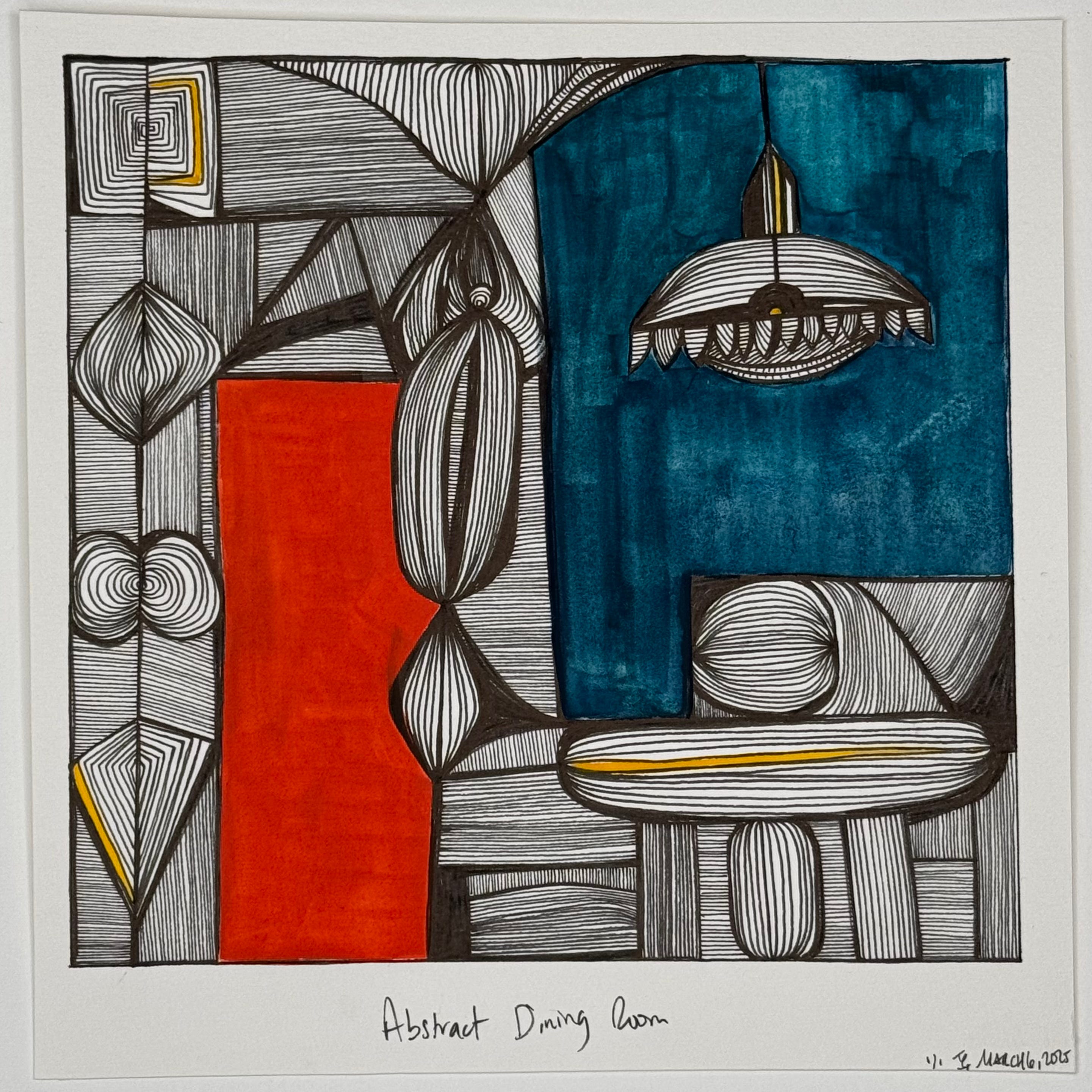
The prompt sounded easy
holding out my hands…
I held out my hands.
Tattooed fingers – a black ink rainbow, a double line, a rising sun – and on the back of my hands, a seed pod, and the flowing leafy handpoked message that serves as my private reminder, created over eight hours in Joshua Tree. Also, slightly grubby nails stained with fountain pen ink – blue, green, red, the little bump on my right middle finger incurred in the years of writing with a pen held right there, marked with a new experiment, a deep ochre, like autumn leaves. The color layers beautifully under the fine lines of black that I will add with the dip pen, back and forth, up and around, a landscape of lines drawn black over shades of yellow. The nib, called a manga nib, offers old-fashioned ink dipping with modern versatility – now it sounds like I’m selling a car.
I don’t think I’ve written about my art that isn’t writing. Pen and ink and now, since the move, more watercolor, stone ground, made by an artist here. I find I prefer cotton paper, but it bleeds; it sucks in the ink and disperses it through tiny paper veins, lipstick seeping into the fine lines around an old woman’s lips.
I draw mostly lines, calming, soothing lines, drawn through guidance and intuition; I consider my drawings writing without words. Some days are easier than others to come up with how to communicate in ways that others understand. Some days, I don’t care to try. Some days the lines work, the words make sense. Some days, I don’t know.
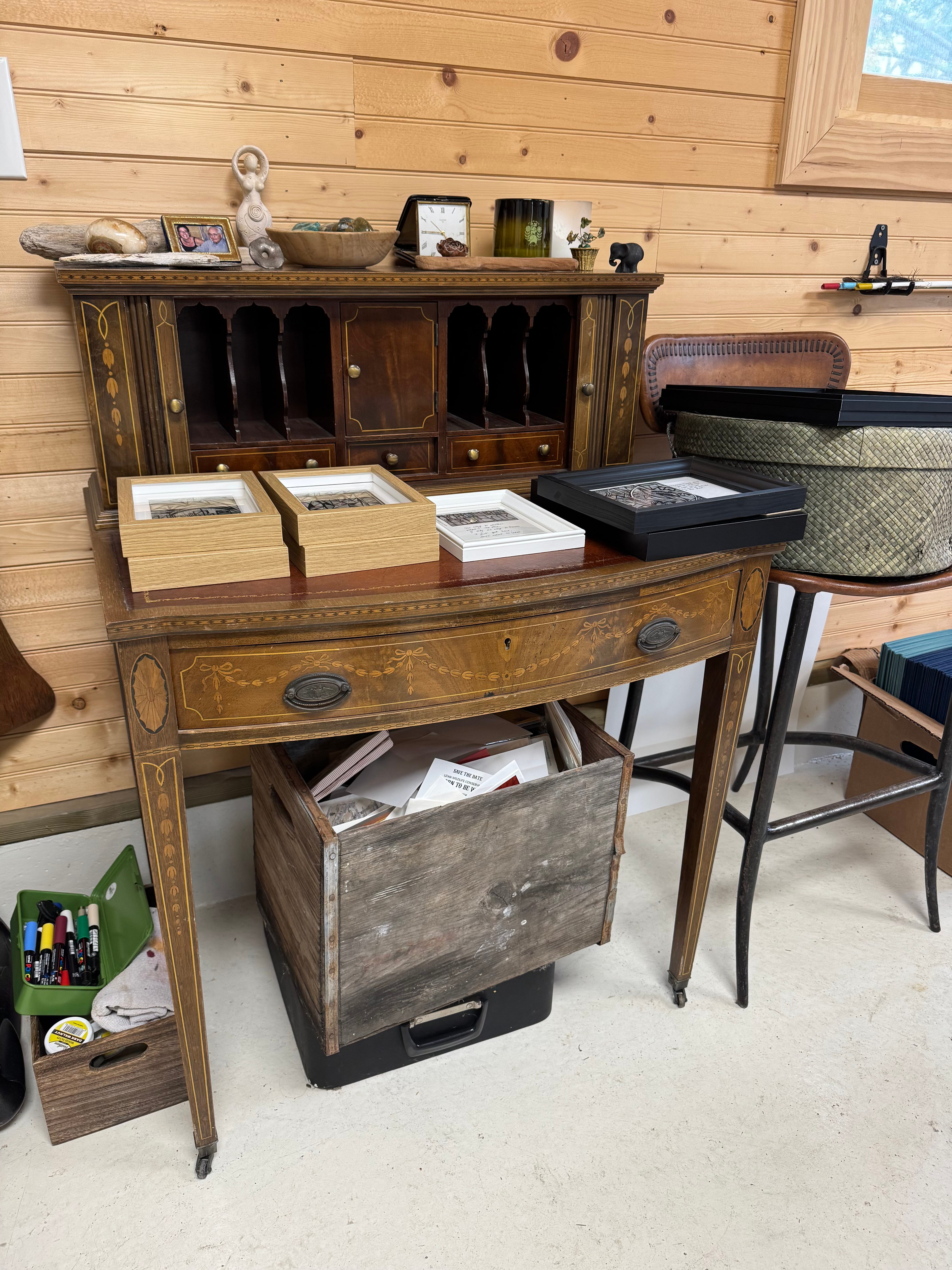
I wait for the call to tell me to bring my art to hang on the wall of a shop I love. I buy frames and cut mats and think about pricing. And I wait. It seems less complicated than writing, less… wordy (pardon the pun), but also more exposed. With words, everyone seems quick to tell me how it’s done, how it should be done, whereas with these lines, line after line, narrow, separate, apart, corners, close together, patterned, every person sees something different. The language of sight is skewed to suit each viewer.
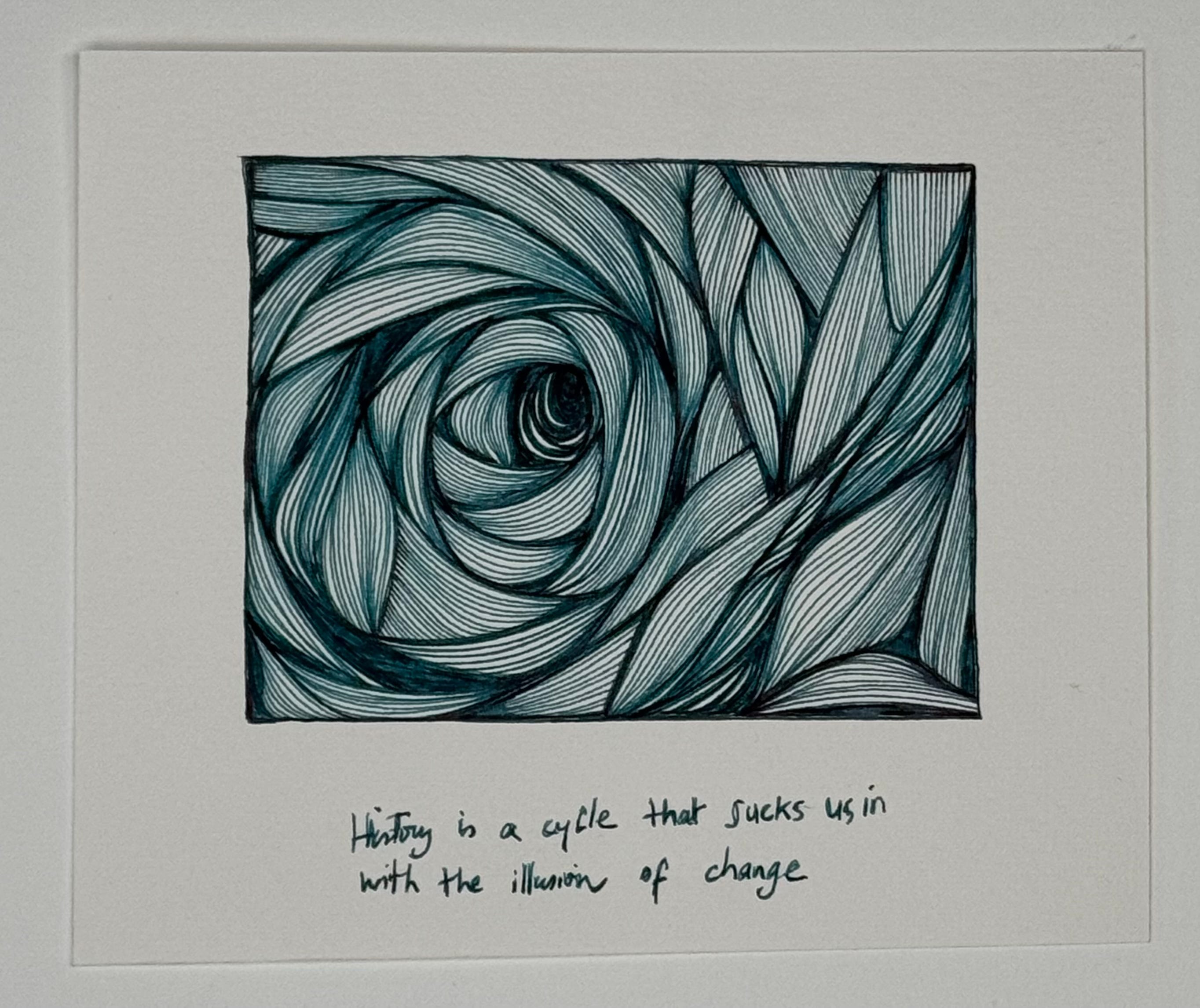
How to make the leap from lines to words, from words to lines? I listen to a podcast in which Maggie Smith calls writing coming home to herself. Lines don’t scare me, they draw the path home to myself. Words terrify me as much as they offer comfort. Actually that isn’t true – words don’t scare me, meaninglessness does.
Meaninglessness is terrifying, and meaninglessness has sprung up like mushrooms on a rotting log in the moist shade of a rainy spring day.
The first time I noticed the danger of meaninglessness was back in the last century, when I lived in Jerusalem. All of a sudden, I noticed that the word peace had lost its meaning.
Peace, peace, the word got thrown around like spitting chewing tobacco. Peace, peace, they called though they meant war. Peace, they cried when they meant tolerance and sometimes intolerance. Peace, they cried so much that peace stopped meaning anything at all.
And now the words safety and democracy and beautiful and defend.
Then there are the words that don’t lose their meaning but instead morph and change to fit the speaker. Sometimes these meanings are lost, misunderstood, abused. My father said he loved me. I tell my daughter I love her. Those are two different loves. My love for my husband is different from the love I have for my favorite book, the color on my wall, the smell of a certain perfume that reminds me of my grandmother. Love is the word we use for all of those feelings, though really, each one should be called something else.
“Come to the textile center,” a new friend messaged, when I first arrived in Minneapolis. I wanted to see if better-trained lines were sewn straighter than the haphazard cocoons I create with needle and thread that appear to cry out “moths ate here!” I crave sewing words onto fabric but lack the skills to even sew in a straight line like I make lines with my fountain pen.
I turn on a podcast because I feel the need to be informed. My lines shift when certain news comes on. I pull out my sketchbook at a free-jazz concert, and the lines become more random when the horn player plays his solo. At a rock and roll concert, I sit in the back, on the stairs, and draw the guitar in lines, in patterns, the singer’s vocals; when the music ups in intensity, so do my lines. They look like nothing in particular.
“I see…” is how my husband gives me feedback. Usually I don’t see what he does. I am sure of nothing about these lines, about the world, but the lines chart my emotions like a heart monitor.
Beep, line up
Beep, around
Beep, I need a ruler
Beep, line down
Beep, three up, three over. None of my lines touch.
There are hundreds of lines, indescribable, inexplicable.
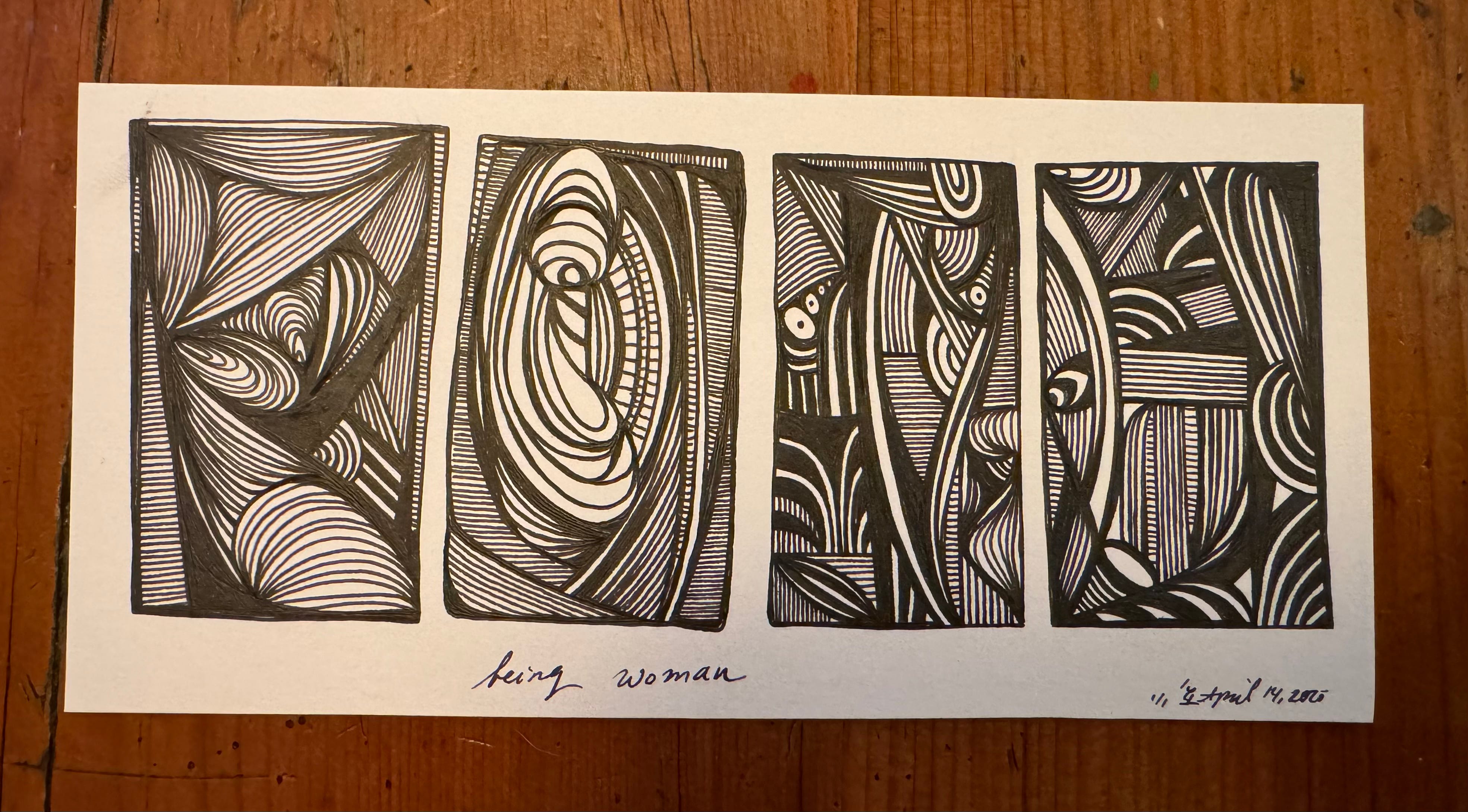
A childhood classmate reminds me “you’ve always done this.” I don’t remember.
It’s raining in the Midwest. Tornado warning. Bach cello is playing. I imagine the line of a raindrop, from the sky to the ground, bouncing off the green grass, the arc it creates. Another line.
In the end, she did call. “Can you bring five to ten pieces in? I love your lines.” And so, my art will be hanging for sale, on a wall that isn’t mine in North Minneapolis, throughout the month of May.
The first thing I think is how much more comfortable I feel with having my lines on a wall than I do with my words sitting on the pages of a book. As someone who used to hide in her books, a wall seems more accessible. On a wall, the viewer must remain in relationship with their surroundings, whereas in the privacy of those pages, anything can happen.
LOVE
So many moments. Drawing lines less complicated than drawing with words. A moth has eaten here! And in a shop for more sharing. Thanks G